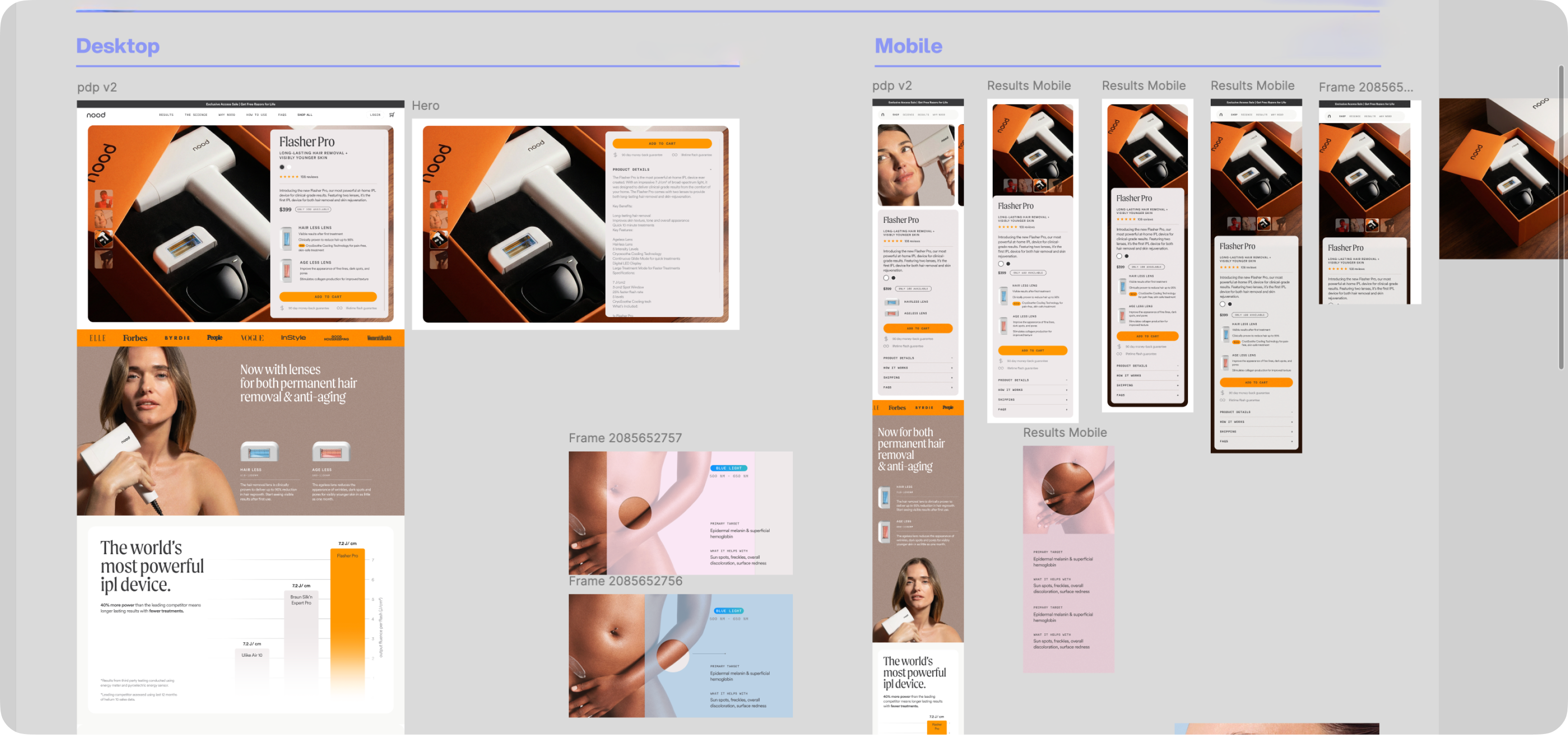
Can AI build a Shopify store?
Here’s what it can (and can’t) do
By Sofi, Shopify Developer ·
A couple of years ago, I wouldn’t have naturally opened Chat GPT while working on a Shopify project. It was useful for the occasional question or code snippet, but that was about it. Fast forward to today, and it’s a core part of my toolkit. It won’t build a full store for you, but it definitely speeds things up. Does that mean it can replace a Shopify developer? Not yet.

Where AI already shines
Getting started is probably where AI saves us the most time. Whether we’re building a new Shopify section or working inside a theme we didn’t originally develop, it helps us get up to speed much faster. Instead of spending hours understanding an unfamiliar codebase, we can identify where to focus within minutes. Debugging is another area where it has made a noticeable difference. It doesn’t always fix bugs the best way, but it helps narrow down where the problem is coming from. Something that used to require an hour or two of investigation can often be reduced to ten or fifteen minutes, leaving more time to actually implement the solution instead of searching for it. I’ve noticed this especially when working on Shopify themes I didn’t build myself. Instead of jumping between files trying to understand where an issue starts, AI usually helps me identify where to look first. AI has also become a useful brainstorming tool. Whether we’re exploring different approaches or documenting a feature, it helps organize ideas much faster, but the final decisions still come from the team.
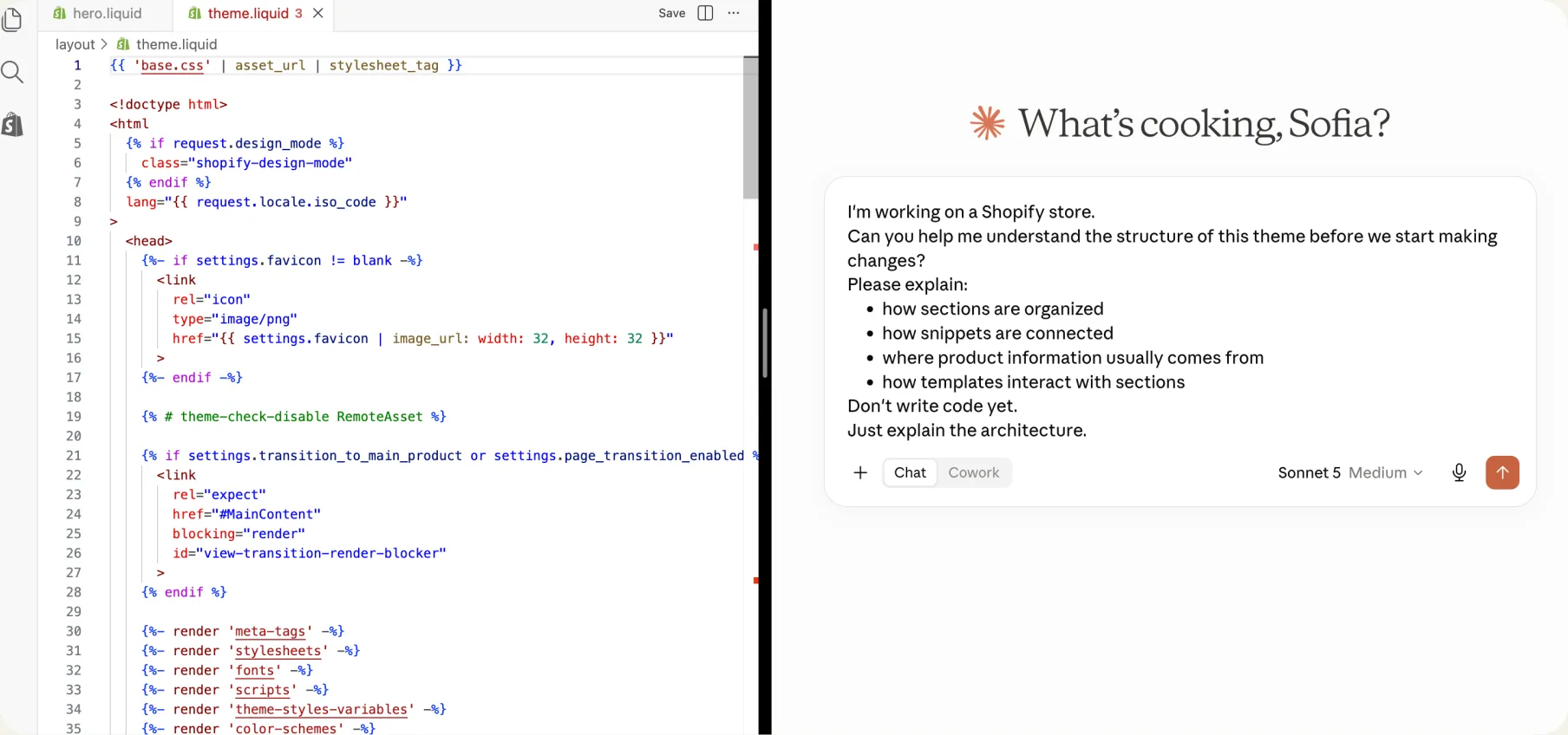
Where human experience still matters
As impressive as AI has become, there are still plenty of situations where it falls short. The biggest limitation is context. Even though today’s tools can remember conversations, a real Shopify project is far more complex than what fits into a prompt. Developers understand everything that happened before they opened the file: previous decisions, technical constraints, third-party integrations, business priorities, and how customers actually use the store. For example, AI might suggest rewriting an entire product section to fix what looks like a small visual issue. On paper, that solution makes sense. In reality, that same section could also power subscriptions, reviews, analytics events, metafields, or custom app integrations. A developer knows that changing one piece of the theme can have consequences elsewhere. I’ve had situations where AI suggested a perfectly reasonable solution that would’ve broken three other features because it simply didn’t have the full project context. The same idea applies to performance. AI understands concepts like lazy loading, image optimization, and Core Web Vitals, but it doesn’t always know when those best practices should or shouldn’t be applied. For example, lazy loading every image sounds like a good idea until it delays the hero image and hurts your LCP (Largest Contentful Paint). Those decisions depend on the specific store, not just on general recommendations.

Claude Code changed our workflow
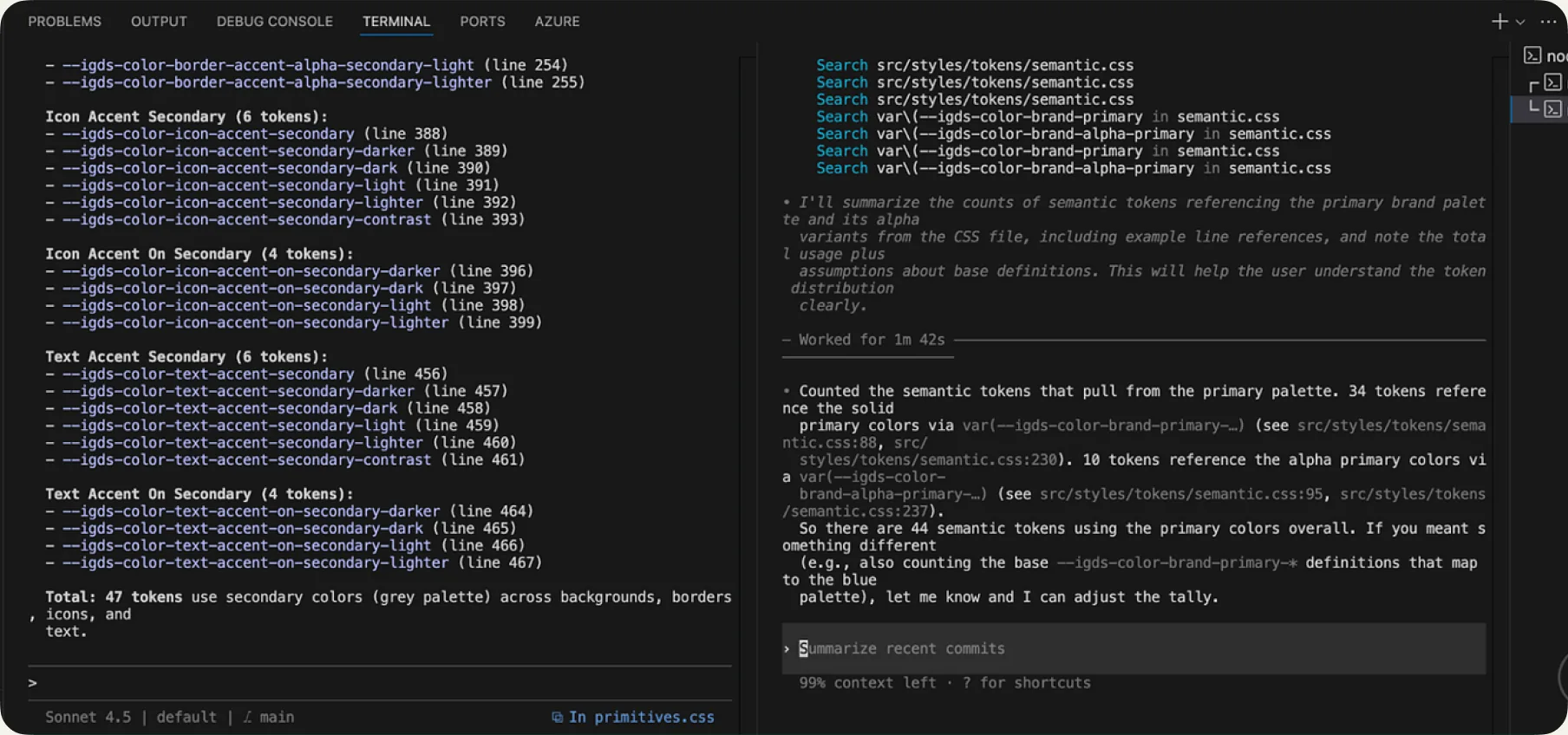
I’ve experimented with several AI tools, including ChatGPT, GitHub Copilot, Cursor, Claude Code and others. So far, Claude Code has made the biggest difference because it works directly with the project instead of treating every request as a separate conversation. For me, the biggest benefit isn’t that it writes code, it’s that it lets me focus on the interesting part of development. Instead of spending time on repetitive updates like swapping assets, making small UI changes, or recreating the same structures, I can focus on solving real problems. I’ve found that the best results come when I already have a clear idea of what I’m trying to build. That said, I still see Claude Code as a collaborator rather than an autopilot. I’m happy to let it generate a first implementation or help with repetitive work, but I still wouldn’t ask it to freely refactor an entire Shopify theme or product section without reviewing every change.
So... can AI build a Shopify store?
The short answer is yes, but not on its own. Building a successful Shopify store has never been just about writing code. It’s about understanding the business behind the brand, making thoughtful technical decisions, balancing performance with user experience, and knowing when not to implement the first solution that works. Over the past year, one thing has become very clear to me: AI delivers the most value when it helps me work faster, not when it replaces my judgment. That’s why I see it as a development tool, not a replacement for developers. And honestly, I think that’s a much more exciting future than replacing developers altogether.
CreativeWise is a packaging and brand design studio for consumer brands. We build brand worlds, packaging systems, and AI photo campaigns for brands scaling from 3 to 30+ SKUs.